Music can be a remarkable tool for aiding children's development. But what makes it so effective?
Wednesday 20th May 2020
We here at Allstar Rock Academy believe there are few things in life more gratifying than seeing our children learn and grow. From the first time they smile or grasp a parent’s finger, to those tentative first steps and first words, through to the first days in the classroom and beyond – watching how children cultivate an understanding of the world around them is one of life’s greatest and most fascinating experiences.
But these aren’t just moments to be captured in a photo album or cherished in parent’s memories. These events represent significant and vital milestones in the development of a child’s ability to make sense of, and interact with, the world around them. In fact, according to the National Child Development Study, the effects of the earliest years of our development stay with us right into our adulthood – directly affecting numeracy, literacy, and problem-solving skills later in life.

Our understanding of the complexities of childhood development have never been stronger. Gone are the days when children were simply looked upon as passive beings, or even miniature versions of adults. Thanks to the work of psychiatrists like Jean Piaget we now understand that children think totally differently to adults, and this in turn has allowed us to view childhood development through a vastly different lens.
As one of the UK's leading providers of rock band lessons for schools, we passionately believe that music is one of the best ways for children to develop some of the most basic and important tools for their ongoing development. Especially in the ‘rock band’ setting of an Allstar Rock Academy lesson. So, in this blog, we’re going to talk in detail about each area of childhood development, and how music can guide a child towards important developmental milestones in a way that’s fun and completely intuitive.
WHAT ARE THE MAIN AREAS OF CHILD DEVELOPMENT?
Every child learns at different speeds. Whilst one child might master walking as early as 9 months, some may take until 14 or 15 months to reach the same goal. The nuances of mastering the areas of early childhood development are many, and complex. So, it can be useful to break up child development in to five specific areas of focus. Let’s go through each in turn and talk about why they’re so important.
Gross Motor Skills Development
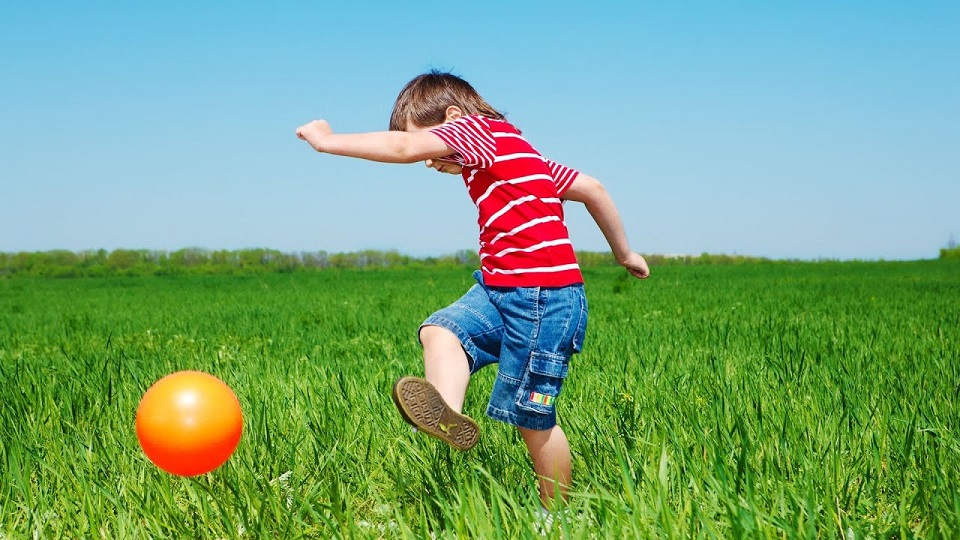
What is it? Gross motor skills are those used to move large muscles in the legs, arms torso in a functional manner. These are some of the most basic skills that we begin to learn as infants, and their development begins at a surprisingly early age.
What does it look like? Our earliest gross motor development takes fairly basic form - things like learning to sit up unsupported or walk comfortably and smoothly. Later on in child development, it is represented by the ability to play with comfort and confidence – for example to climb on play equipment, to kick a ball, and to throw.
Fine Motor Skills Development
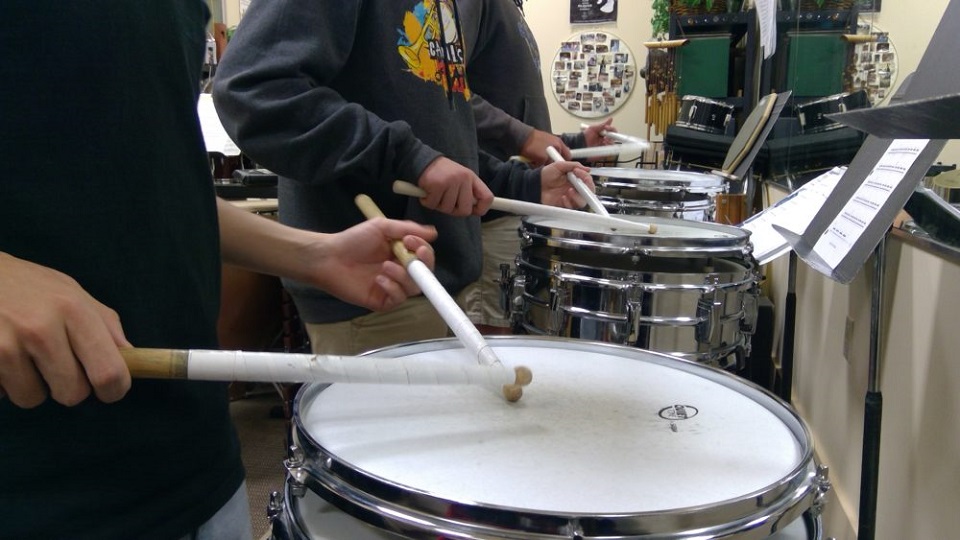
What is it? Fine motor skills are the ability to use the smaller, more dextrous muscles in our body that are so vital to our everyday lives. Fine motor skills focus most specifically on the development of the muscles in the hands and fingers.
What does it look like? At their most basic, fine motor skills development involve a simple awareness of the hands (relaxing the fingers, putting hands into mouths etc). As your child grows, fine motor skills shift focus onto things like grasping objects and moving objects between hands. Learning music is an incredible developer of fine motor skills…more on that later though!
Cognitive Development

What is it? Cognitive development covers our ability to learn more about the world around us, and then to use that information to solve problems, both simple and complex. Infants take in a staggering amount of information and use every one of their senses to better understand the world that surrounds them.
What does it look like? Early cognitive development is mostly focused around mastering an understanding of the senses – the ability to focus on individual objects, taste the difference between sweet and salty flavours and hear different volumes and pitch, for example. As children get older, cognitive development includes becomes more and more nuanced, taking in things like the difference between ‘me’ and you’ and an ability to learn through exploration. Later in life, cognitive development leads to more and more sophisticated problem solving.
Speech & Language Development
What is it? Unsurprisingly, this is our ability to cultivating an understanding of language, and then to use language to communicate with those around us. It is one of the most complex and mysterious areas of early child development.
What does it look like? Early examples would be the understanding that crying brings food, warmth, and companionship. As a child’s brain develops, so does the complexity of their understanding of speech and language. Later in life, speech and language development takes in the learning to say their first words, and then understand the difference between more and more complex speech and vernacular, for example the difference between singular and plural, past and present.
Social & Emotional Development
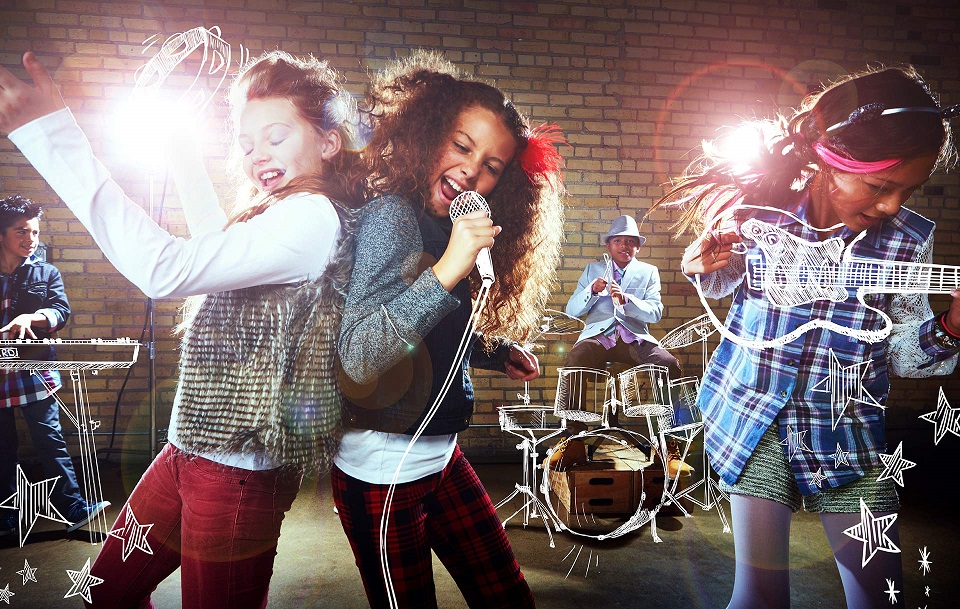
What is it? Social and emotional development is our ability to interact with others competently and confidently. It is a nuanced area of child development and includes both a child learning to help themselves, and learning develop self-control.
What does it look like? Early examples of social and emotional development are centred around the path towards self-awareness. It encompasses things like initially recognising faces and the enjoyment of play. Later on, in a child’s life, social and emotional development can be seen in their need to be liked by their peers and in turn, try to please them and make them laugh. It includes crucial lessons we need to learn in order to contribute to the wider society in a meaningful and substantive way.
THE ROLE OF MUSIC IN CHILD DEVELOPMENT
_1589982534.jpg)
Music is primal. It communicates with each of us on a near fundamental level, and as such it can be an almost unrivalled tool through which to aid child development. At it’s best, music brings together all these specific areas of development into one activity that children find incredibly instinctive and fun.
In fact, a recent study by the Brain & Creativity Institute found a direct correlation between learning a musical instrument in childhood and accelerated brain development. Music classes help children to understand themselves and the world around them in pretty unique ways, which we’ll explore in further detail now.
HOW AN ALLSTAR ROCK ACADEMY SESSION CAN HELP CHILD DEVELOPMENT
We passionately believe that our Allstar Rock Academy classroom rock band sessions really propel children’s development in a way that’s so much more effective than traditional, one-to-one music lessons. Let’s take another look at each of the five areas of child development in turn and see how classes with us can be an absolute game changer for child development.
Motor Skills Development
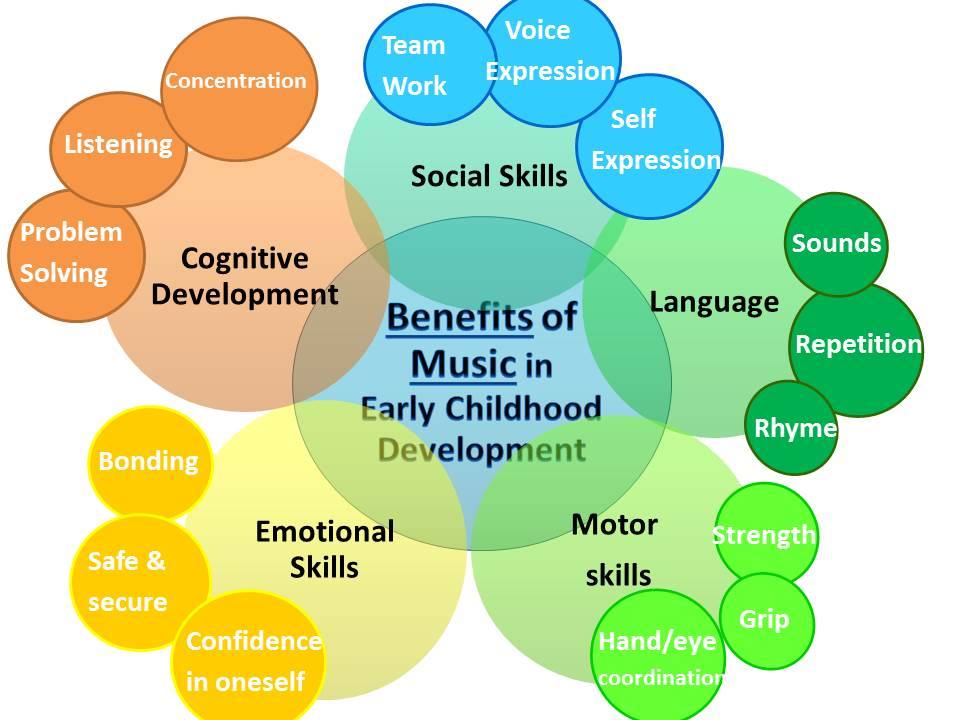
Both gross and fine motor skills are naturally cultivated through learning and performing music. From basic examples likes clapping along to a beat, to more complex fine motor skills when learning to hold and effectively play various instruments. Children’s dextrousness can be improved immeasurably by learning how to hold drumsticks or press down the strings on a guitar, and playing these instruments well requires subtlety and a deftness of touch that can develop at a remarkably fast rate once they begin to practice regularly.
Cognitive Development
Learning music at all levels involves a commitment to problem-solving through trial and error – the very basics of cognitive development itself. Learning arrangements in Allstar Rock Academy sessions offer children the opportunity to do maths (counting of bars of four, for example) without even realising that they’re doing it in the first place!
Speech & Language Development
Music requires constant communication. For many children, the lyrics of songs are some of the first words they learn. Allstar Rock Academy sessions promote speech and language development through performance, and by children mastering the ability to communicate their ideas with their group leaders and their fellow bandmates.
Social & Emotional Development
Few activities bring people together like music. In an Allstar Rock Academy session, children are encouraged to work together to make music that sounds great – and they’ll only get there by taking on board one another’s ideas to find the best result. Music is intensely collaborative and is made better by everyone getting to play their part. We encourage all our students to listen to one another’s ideas and to learn from them, as it will make the end product so much better. Our sessions also serve to give children a platform to express themselves in a safe creative space. This can help shy or reserved children find their voice and gives a platform to the most confident of kids to burn off their excess energy!
Music can be such a powerful tool for learning and development, in an incredibly fun and open setting. If you’d like to chat a little more about how an Allstar Rock Session can help your child or whole class of children fund their voice, you can get in touch with us directly for even more information. We can’t wait to hear from you!